
Energy Efficient Home Upgrades That Lower Bills Fast
Discover the most effective energy efficient home upgrades that lower bills, from air sealing to solar, with a practical guide to saving money.
By Justin Blake
Learn more about Weatherization for guides, costs, and what to expect.
Compare Weatherization Pros Near You

Enter your ZIP code to compare top-rated local professionals and request free quotes.
Every month, the same ritual plays out in millions of households: the utility bill arrives, and the numbers seem to climb no matter how careful you are. The heating runs a little too long, the AC struggles against a drafty window, and the water heater works overtime. These are not just annoyances. They are signs that your home is losing energy, and with it, your hard-earned money. The good news is that you do not need a full-scale renovation to see dramatic savings. Strategic, energy efficient home upgrades that lower bills are within reach, and many of them pay for themselves faster than you might think.
This guide walks you through the most impactful upgrades, from simple DIY weatherproofing to high-ticket system replacements. We will cover the expected costs, the savings you can realistically expect, and the financing options that make these projects accessible. Whether you are planning a major remodel or just want to stop the financial leak, this roadmap will help you prioritize. And when a project calls for professional expertise, we will show you how to find the right contractor through a trusted platform like USremodel.
Why Energy Efficiency Is a Financial Priority
Rising utility rates are not a temporary trend. Across the United States, electricity and natural gas prices have climbed steadily, and experts predict they will continue to do so. For the average homeowner, heating and cooling account for nearly half of total energy consumption. That means your HVAC system, insulation, and windows are the primary levers you can pull to cut costs. A home that leaks conditioned air is like a bucket with holes: you keep pouring money in, but the comfort and savings run right out.
Beyond the monthly savings, energy efficiency directly impacts your home's resale value. Appraisers increasingly factor in energy performance, and homes with modern, efficient systems often sell for a premium. Buyers are willing to pay more for a property with lower predictable utility costs, especially younger generations who prioritize sustainability. So when you invest in these upgrades, you are not just reducing your bills today; you are building equity for the future.
The federal government and many local utilities offer incentives to sweeten the deal. The Inflation Reduction Act extended and expanded tax credits for home efficiency improvements, covering a significant portion of costs for qualifying projects. For example, you can claim a credit for 30% of the cost of insulation, air sealing, and certain energy-efficient windows and doors, up to a lifetime limit of $1,200 per year. Heat pumps and solar installations have even more generous credits. Understanding these incentives is crucial because they directly reduce your upfront investment, making the payback period much shorter.
Assessing Your Home's Energy Weak Points
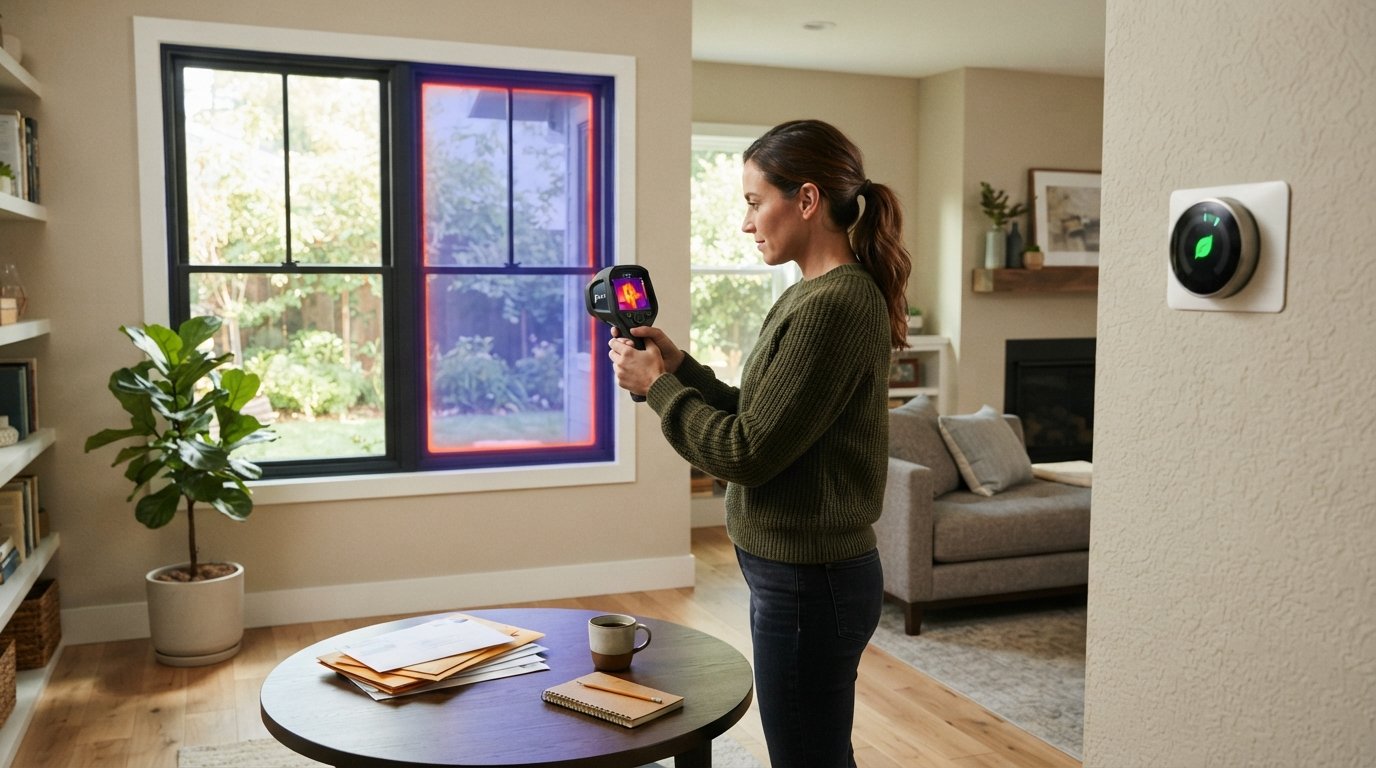
Before you start spending money, you need to know where your home is losing energy. A professional home energy audit, also called an energy assessment, is the most reliable way. During an audit, a technician uses specialized equipment like blower doors and infrared cameras to detect air leaks, insulation gaps, and equipment inefficiencies. Many utility companies offer this service at a reduced rate, sometimes even for free, as part of their efficiency programs. The audit will produce a prioritized list of recommendations, showing you exactly which upgrades will deliver the biggest bang for your buck.
If a professional audit is not in your budget, you can do a simple walkthrough yourself. Check for drafts around windows and doors, feel for cold spots near outlets and baseboards, and inspect your attic insulation. Look at the age of your HVAC system: if it is more than 15 years old, it is likely running at a fraction of its original efficiency. The U.S. Department of Energy provides a useful checklist to guide you through a self-assessment. This DIY approach can help you identify the most obvious problems, but for a complete picture, professional expertise is invaluable.
Reading Your Utility Bills
Your monthly bills are a treasure trove of data. Compare your usage (in kilowatt-hours and therms) from year to year, not just the dollar amount. A sudden spike in usage often indicates a specific problem, like a failing water heater or a leaky duct system. Look for patterns: if your usage is high in both summer and winter, your insulation and sealing are likely inadequate. If it is high only in one season, your HVAC system might be the culprit. Tracking this data over time helps you measure the success of your upgrades, as you will see the usage drop after a project is complete.
Top Upgrades with the Best ROI
Not all upgrades are created equal. Some offer a near-instant payback, while others take years to recover their cost. Based on data from the U.S. Department of Energy, Energy Star, and industry studies, here are the most effective energy efficient home upgrades that lower bills, ranked by their impact and return on investment.
- Air sealing and insulation: Often the most cost-effective upgrade, sealing leaks and adding attic insulation can save up to 20% on heating and cooling costs.
- High-efficiency HVAC systems: Replacing an old furnace or AC with an Energy Star certified model can cut energy use by 20% to 30%.
- Solar panel installation: With federal tax credits and net metering, solar can eliminate or drastically reduce your electricity bill, with a typical payback period of 7 to 10 years.
- Energy-efficient windows: Replacing single-pane windows with double or triple-pane, low-E coated models can save $200 to $600 per year in a typical home.
- Heat pump water heaters: These are 2 to 3 times more efficient than standard electric water heaters, saving a typical family around $350 per year.
These upgrades work together. Air sealing reduces the load on your HVAC system, so a smaller, more efficient unit can do the job. Solar panels offset the electricity that the heat pump uses. The combined effect is a home that is comfortable, resilient, and incredibly cheap to operate. The key is to start with the low-hanging fruit (sealing and insulation) before moving to more expensive system replacements.
Air Sealing and Insulation: The First Step
Think of your home as a building envelope. The envelope includes the walls, roof, windows, and doors, but also the tiny cracks and gaps that you cannot see. These gaps, around pipes, wiring, and in the attic, allow conditioned air to escape and outside air to enter. The result is that your furnace or AC works harder than necessary, driving up your bills. Air sealing is the process of closing these gaps with caulk, foam, and weatherstripping. It is a relatively inexpensive project that a handy homeowner can do over a weekend, or a professional can complete in a day.
Once the leaks are sealed, you need to address insulation. The attic is the most critical area, as heat rises and escapes through the roof. Most older homes are under-insulated by modern standards. Adding a layer of fiberglass or cellulose insulation can make an immediate difference in comfort and energy use. The recommended R-value for attics in most climates is R-38 to R-60, which is about 12 to 18 inches of insulation. Check your current level and add more if needed. This is one of those energy efficient home upgrades that lower bills quickly, often paying for itself in under two years.
Professional insulation contractors can also insulate walls, floors, and crawl spaces, but these projects are more invasive and expensive. Start with the attic and crawl space, as they offer the highest return. A blower door test, performed during an energy audit, can verify that the air sealing is effective. The test depressurizes the home and measures the air leakage rate. A lower rate means a more efficient home.
HVAC Upgrades and Smart Thermostats
Heating and cooling is the largest energy expense in most homes. If your system is old, it is probably working at 70% efficiency or less. Modern high-efficiency furnaces and air conditioners can reach 95% to 98% efficiency. Upgrading to a new system is a significant investment, but the savings are substantial. For example, replacing a 15-year-old furnace with an Energy Star certified model can save $300 to $500 per year, depending on your climate and fuel prices. When you pair this with a heat pump, which provides both heating and cooling, you can eliminate natural gas use entirely in many regions.
Before you replace the whole system, consider upgrading your thermostat. A smart thermostat, like a Nest or Ecobee, learns your schedule and adjusts the temperature automatically. It can lower the heat when you are asleep or away, and start pre-conditioning before you return. The U.S. Department of Energy estimates that a programmable thermostat can save about 10% on heating and cooling costs. Smart thermostats also give you detailed usage data, so you can see exactly how much energy you are using and when. Many utility companies offer rebates for smart thermostat installation, reducing the upfront cost to nearly zero.
Another factor is the condition of your ductwork. Leaky ducts can waste up to 30% of the conditioned air before it reaches your living spaces. Sealing and insulating ducts, especially those in unconditioned spaces like attics and crawl spaces, is a critical but often overlooked upgrade. A professional HVAC contractor can perform a duct leakage test and seal any leaks with mastic or metal tape. This is a cost-effective way to improve system efficiency without buying new equipment.
Windows and Doors: Stopping the Draft
Windows are a major source of heat loss and gain. Single-pane windows are the worst offenders, but even double-pane windows that are old and poorly sealed can let air escape. Replacing all the windows in your home is expensive, but it is one of the most visible and impactful energy efficient home upgrades that lower bills. Energy Star certified windows use advanced coatings and gas fills to reflect heat while letting in light. They come in a range of styles and price points, so you can find options that fit your budget and aesthetic.
If full window replacement is not in your budget, there are cheaper alternatives. Window film or low-E storm windows can be installed over existing panes to reduce heat transfer. Caulking and weatherstripping around the window frames can also stop drafts. These measures can reduce energy loss by 10% to 20%, which is meaningful for a small investment. For doors, look for the same air leaks and add door sweeps and weatherstripping. A solid-core door or a door with a high R-value is also more efficient than a hollow-core door.
When you do replace windows, choose the right type for your climate. In cold climates, look for windows with a low U-factor (below 0.30) and a high solar heat gain coefficient (SHGC) to capture free solar heat. In hot climates, you want a low SHGC to block heat. A reputable window contractor can help you select the best product for your region. Remember, the installation quality is just as important as the window itself. Poor installation can negate the benefits of a high-efficiency window, so always use a professional.
Water Heating: The Overlooked Energy Hog
After heating and cooling, water heating is the second-largest energy expense in most homes. A standard electric water heater runs around the clock, keeping 40 to 50 gallons of water hot even when you are not using it. This standby heat loss is wasteful. Heat pump water heaters, also called hybrid water heaters, use a heat pump to move heat from the surrounding air into the water, making them 2 to 3 times more efficient than standard models. They cost more upfront, but the annual savings are significant, often $350 to $450 per year. The federal tax credit can cover up to 30% of the cost, making them more affordable.
Tankless water heaters are another option. They heat water on demand, so there is no standby loss. They are more efficient than standard tanks, especially for households that use less than 41 gallons of hot water per day. However, they have a higher upfront cost and may require a larger gas line or electrical service. A professional plumber can help you decide which type is best for your home. Additionally, simple habits like lowering the thermostat on your water heater to 120 degrees and insulating the hot water pipes can reduce energy use without any major investment.
When you are planning a bathroom or kitchen remodel, consider integrating a heat pump water heater or a recirculation system to minimize water waste. These upgrades not only lower your bills but also increase your home's value, as they are seen as modern, efficient features. If you are working with a contractor, ask them about the best water heating solutions for your specific needs.
Solar: The Ultimate Money-Saver
For many homeowners, solar panels are the ultimate goal. By generating your own electricity, you can reduce or even eliminate your monthly electric bill. The technology has become more affordable and efficient over the years, and the federal solar investment tax credit (ITC) covers 30% of the installation cost, with no cap. Many states and local utilities offer additional incentives, such as net metering, which pays you for the excess power you send back to the grid. This means that during sunny months, you can build up credits that offset your usage during the winter.
The initial cost of a solar system is substantial, typically $15,000 to $25,000 before incentives, but the long-term savings are impressive. A typical system pays for itself in 7 to 10 years, after which you are essentially generating free electricity for the remaining 15 to 20 years of the system's life. Solar also increases your home's resale value. According to Zillow, homes with solar panels sell for 4.1% more on average than comparable homes without them. If you plan to stay in your home for several years, solar is one of the best investments you can make.
Before you commit, get multiple quotes from certified solar installers. USremodel can connect you with vetted solar contractors in your area. They will assess your roof's orientation, shading, and your energy usage to design a system that maximizes your savings. Financing options like solar loans and leases make it possible to install solar with little to no money down. A professional installer will also handle the permits and interconnection agreements, so the process is seamless.
Financing and Professional Help
Many homeowners hesitate to start these projects because of the upfront costs. But there are many ways to finance energy efficient home upgrades that lower bills. First, check for rebates and incentives from your utility company and local government. The Database of State Incentives for Renewables & Efficiency (DSIRE) is a comprehensive resource. Second, the federal tax credits can significantly reduce your tax bill, but remember they are credits, not deductions, so they reduce your tax liability dollar for dollar. Third, consider energy-efficient mortgages (EEMs) or home improvement loans. These can be rolled into your mortgage or taken as a separate loan, often with favorable terms.
For larger projects like HVAC replacement, window installation, or solar panels, it is wise to use a professional contractor. Not only do they have the skills and tools to do the job right, but they can also provide accurate cost estimates and help you navigate rebates. A reputable contractor will be licensed, insured, and willing to provide references. They should also offer a warranty on their work. Using a lead generation platform like 180Remodel can help you find qualified contractors quickly, and you can compare quotes from multiple companies to ensure you get a fair price.
Another option is to bundle multiple upgrades into a single project. For example, if you are replacing your roof, consider adding solar panels or improving attic insulation at the same time. This can save on labor costs and minimize disruption. A professional energy consultant can help you plan a phased approach that works with your budget and timeline. You do not have to do everything at once; even one or two upgrades can make a noticeable difference in your monthly bills.
How to Get Started
The first step is to set a budget and a priority list. Based on your energy audit, choose the upgrades that will deliver the greatest savings for the least cost. Air sealing and insulation are always a good starting point because they are relatively inexpensive and improve the effectiveness of all your other systems. Next, consider upgrading your thermostat and water heater, as these have quick payback periods. Then, if you have the funds, tackle the bigger projects like HVAC replacement, windows, and solar.
When you are ready to hire a professional, use a trusted service like USremodel to get free, customized quotes from multiple contractors. This allows you to compare prices, services, and warranties without any obligation. Be sure to ask about current rebates and financing options, as many contractors offer specials that can reduce your out-of-pocket costs. A good contractor will walk you through the entire process, from the initial assessment to the final inspection, ensuring that your upgrade is completed to your satisfaction.
Finally, track your savings. Compare your utility bills before and after the upgrades to see the actual impact. Many homeowners see a 20% to 30% reduction in energy use after completing a few key upgrades. Over time, these savings will more than pay for the cost of the improvements, and you will enjoy a more comfortable, valuable, and sustainable home.
Energy efficiency is not a one-time project, but a continuous process. As technology improves, new opportunities arise to save even more. By staying informed and taking action, you can ensure that your home remains a place of comfort and financial stability, not a source of endless bills. Start small, but start today. Your wallet and the planet will thank you.
Learn more about Weatherization for guides, costs, and what to expect.
Compare Weatherization Pros Near You
Enter your ZIP code to compare top-rated local professionals and request free quotes.