
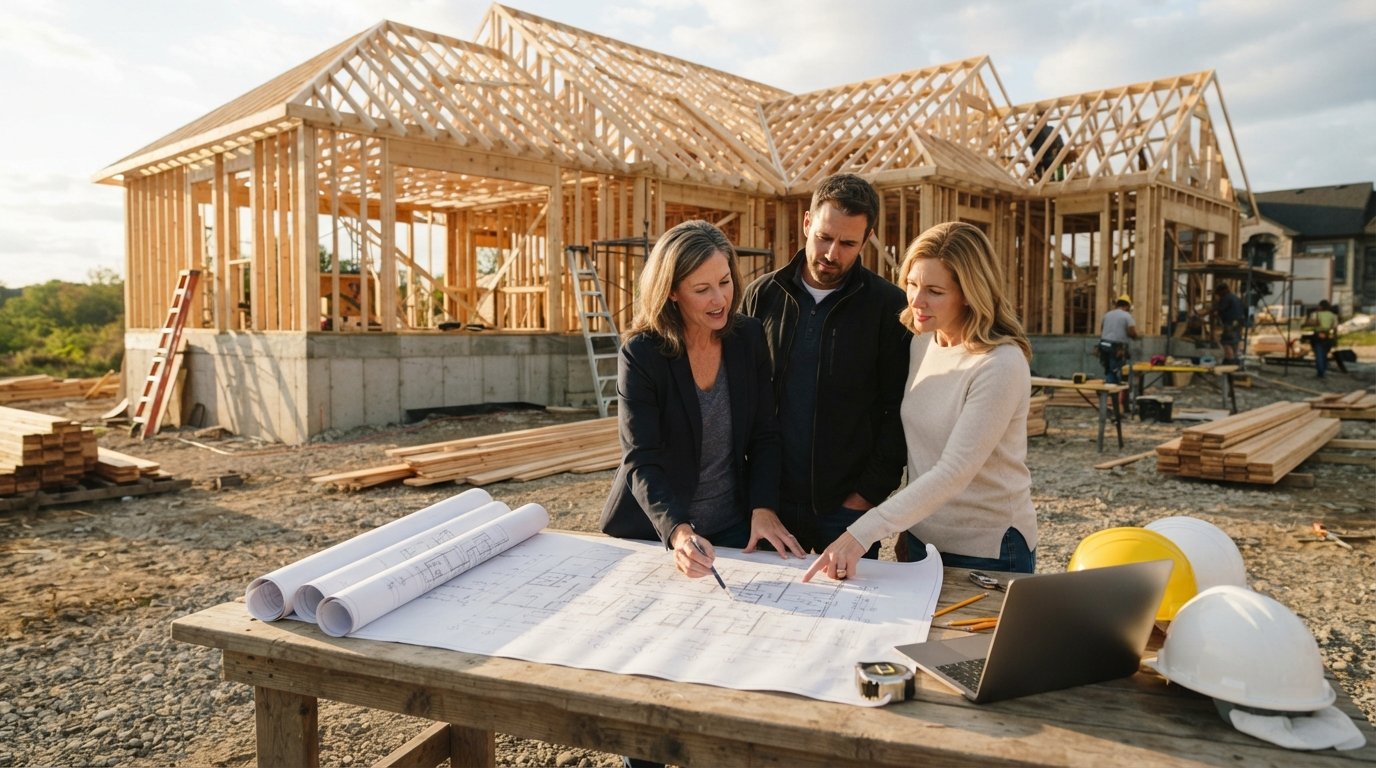
Custom Home Building Process: Homeowner Guide for 2026
Navigate the custom home building process with this homeowner guide. Learn how to plan, budget, and build your dream home with confidence.
By Margaret Sheridan
Learn more about New Home Construction for guides, costs, and what to expect.
Compare New Home Construction Pros Near You

Enter your ZIP code to compare top-rated local professionals and request free quotes.
Building a custom home is one of the most exciting and complex endeavors a homeowner can undertake. Unlike buying an existing house, a custom build lets you choose the layout, finishes, and features that match your lifestyle perfectly. But the journey from an empty lot to a finished dream home involves dozens of decisions, a significant financial commitment, and a team of professionals who must work together seamlessly. This homeowner guide to the custom home building process will walk you through each phase, from initial planning to the final walkthrough, so you can move forward with confidence and avoid common pitfalls.
Phase 1: Planning and Budgeting Your Custom Home
Every successful custom home project begins with a clear vision and a realistic budget. Before you meet with architects or builders, take time to define what you truly need versus what you want. Consider how you live now and how that might change over the next decade. Do you need a home office, a multigenerational suite, or space for a growing family? Your answers will shape the design and keep the project focused.
Budgeting is where many homeowners underestimate costs. The price of the land, site preparation, permits, materials, labor, and landscaping all add up. A common rule of thumb is to budget 10 to 20 percent above your estimated construction cost for unexpected expenses. To get a realistic picture, research local construction costs per square foot and consult with builders early. You can also explore custom home remodeling plans to see how professional planning can align your vision with your budget.
Financing is another critical piece. Most custom home builds require a construction loan, which converts to a traditional mortgage after completion. Speak with several lenders to compare rates, terms, and draw schedules. Some homeowners use a combination of savings, a construction loan, and a bridge loan if they need to sell their current home. Understanding your financing options early will prevent delays later.
Phase 2: Assembling Your Professional Team
Your custom home will only be as good as the team you assemble. The key players typically include an architect or designer, a general contractor, and various subcontractors for specialized trades. Some homeowners hire a design-build firm that handles both design and construction under one roof, which can streamline communication and accountability.
When selecting a general contractor, look for someone with extensive experience building custom homes in your area. Check licenses, insurance, and references. Ask to visit completed projects and speak with past clients. A good contractor will be transparent about timelines, costs, and potential challenges. They should also be willing to collaborate with your architect and incorporate your feedback throughout the process.
For homeowners who want to simplify the search for qualified professionals, platforms like 180Remodel connect you with vetted contractors for a wide range of home improvement services, including custom home building. These services can help you compare multiple bids and find the right fit for your project without spending weeks making phone calls.
Phase 3: Design and Permitting
Once your team is in place, the design phase begins in earnest. Your architect will translate your wish list into detailed drawings, including floor plans, elevations, and specifications for materials and finishes. This is your opportunity to refine every detail, from the placement of windows to the type of flooring in each room. Be prepared for several rounds of revisions; good design takes time.
After the design is finalized, your contractor will submit plans for building permits. The permitting process can take weeks or even months, depending on your local jurisdiction and the complexity of your project. During this time, your team will also finalize the construction schedule and order long-lead items such as windows, custom cabinetry, and appliances. Delays in permitting or material procurement can push back your move-in date, so patience and proactive planning are essential.
It is also wise to review your design with an eye toward future maintenance and energy efficiency. Choosing high-performance insulation, efficient HVAC systems, and durable exterior materials can reduce utility bills and repair costs over time. Many homeowners find that investing in energy-efficient upgrades upfront pays off significantly in the long run.
Phase 4: Construction and Quality Control
Construction is the most visible and often the most stressful phase of the custom home building process. Your general contractor will manage the day-to-day operations, coordinate subcontractors, and ensure that work progresses according to the schedule and budget. You should expect regular site meetings and progress updates, typically weekly or biweekly.
As the homeowner, your role during construction is to stay informed and make timely decisions. When your contractor asks you to choose light fixtures, plumbing fixtures, or paint colors, respond promptly to avoid delays. Visit the site regularly to observe the work, but avoid giving instructions directly to subcontractors; all communication should go through your general contractor to maintain clear lines of authority.
Quality control is critical. Hire a third-party home inspector to conduct periodic inspections at key milestones, such as foundation, framing, and pre-drywall. These inspections can catch issues before they become expensive problems. If you notice something that concerns you, bring it up with your contractor immediately and document it in writing. A well-managed construction phase leads to a smoother final walkthrough and fewer surprises.
Phase 5: Final Walkthrough and Move-In
As construction nears completion, your contractor will schedule a final walkthrough. This is your opportunity to inspect the entire home, room by room, and create a punch list of items that need to be corrected or completed. Be thorough: test every light switch, faucet, appliance, and door. Check for cosmetic issues such as paint touch-ups, scratches on floors, or misaligned tiles.
Once the punch list is addressed and you have your certificate of occupancy, you can prepare for move-in. This is also the time to review your warranty documents, which typically cover workmanship and materials for a specified period. Keep all paperwork, including permits, inspection reports, and warranties, in a safe place for future reference.
Moving into a custom home is a rewarding experience, but it also comes with ongoing responsibilities. Regular maintenance, such as cleaning gutters, servicing HVAC systems, and checking for leaks, will protect your investment. Many homeowners find it helpful to create a maintenance calendar and set aside a small budget each year for upkeep.
Common Pitfalls to Avoid
Even with careful planning, some homeowners encounter challenges during the custom home building process. Being aware of common pitfalls can help you steer clear of them. Here are a few to watch for:
- Underestimating costs: Always build in a contingency fund of at least 10 to 20 percent.
- Changing orders late: Changes after construction begins can be expensive and delay your timeline.
- Poor communication: Establish clear channels with your contractor and document all decisions.
- Skipping inspections: Third-party inspections at key stages can catch costly mistakes.
- Ignoring lifestyle needs: Design for how you actually live, not just for resale value.
By staying engaged and proactive, you can minimize stress and keep your project on track. Remember that building a custom home is a marathon, not a sprint. Patience, flexibility, and a strong team are your best assets.
Frequently Asked Questions
How long does it take to build a custom home?
Most custom homes take 10 to 16 months from the start of construction to move-in, depending on size, complexity, and local permitting timelines. Design and planning can add another 3 to 6 months.
Do I need a real estate agent to buy land for a custom home?
Not necessarily, but a real estate agent with experience in land sales can help you evaluate zoning, utilities, and environmental factors that may affect your build.
What is the best way to finance a custom home?
Construction loans are the most common financing method. They cover the cost of building and convert to a permanent mortgage once the home is complete. Compare offers from multiple lenders.
Can I act as my own general contractor?
While possible, acting as your own general contractor is risky and time-consuming. Most homeowners hire a professional to manage the project, ensuring compliance with codes and timely completion.
Building a custom home is a significant investment of time, money, and emotion, but the result, a home tailored to your exact needs, is well worth the effort. By following this homeowner guide to the custom home building process, you can navigate each phase with greater confidence and create a space you will love for years to come.
Learn more about New Home Construction for guides, costs, and what to expect.
Compare New Home Construction Pros Near You
Enter your ZIP code to compare top-rated local professionals and request free quotes.