
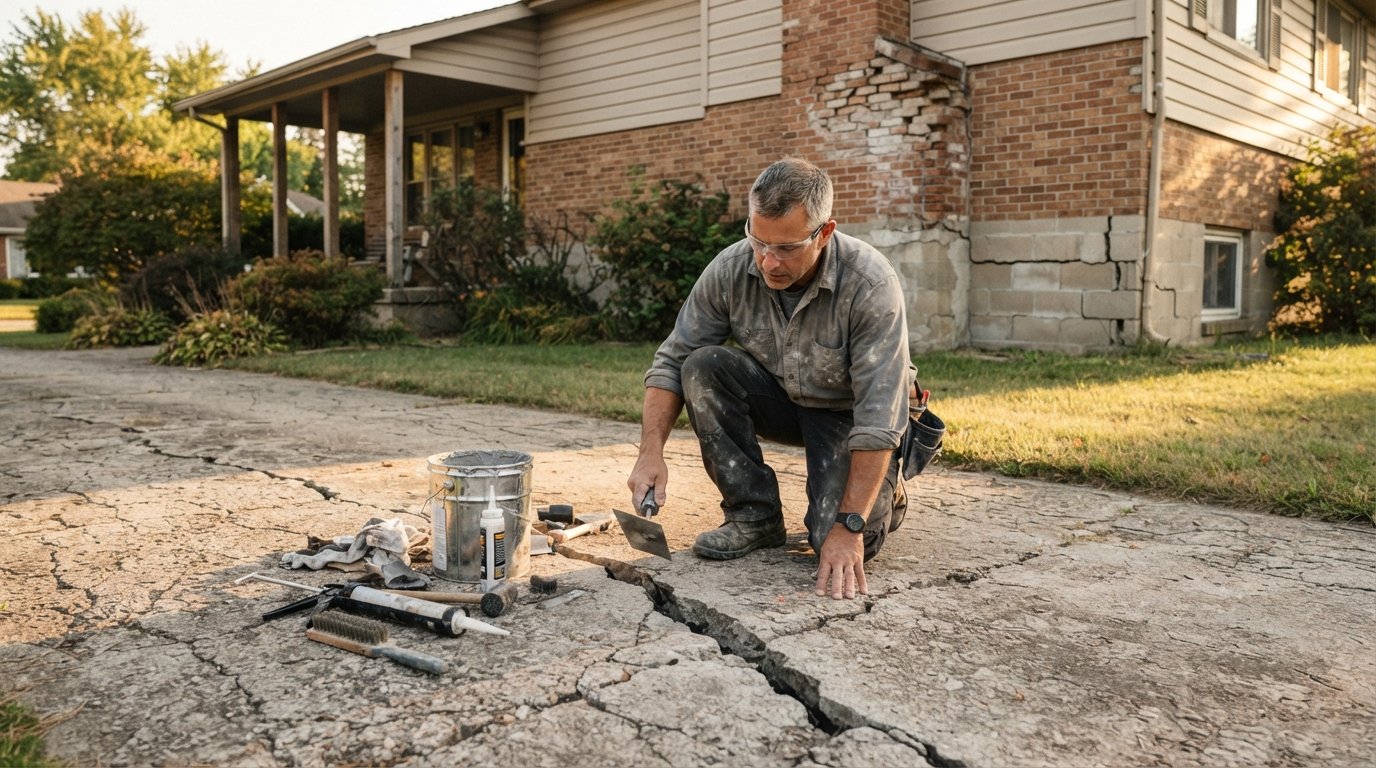
Concrete and Masonry Repair Cost for Homeowners
Concrete and masonry repair cost for homeowners ranges from $250 crack fills to $15,000 foundation work. Learn the real pricing drivers and how to save.
By Chelsea Kris
Learn more about Concrete Repair and Maintenance for guides, costs, and what to expect.
Compare Concrete Repair and Maintenance Pros Near You

Enter your ZIP code to compare top-rated local professionals and request free quotes.
A cracked driveway, a crumbling chimney, or a basement wall showing horizontal fissures can turn a routine home inspection into a financial emergency. For homeowners, the question is rarely whether concrete or masonry damage will appear, but when, and how much the repair will cost. Concrete and masonry repair cost for homeowners typically ranges from a few hundred dollars for minor crack filling to more than $15,000 for major structural foundation work, and that wide gap leaves many property owners unsure whether they are looking at a weekend project or a five-figure investment. Understanding the pricing drivers behind these repairs, from crack width to accessibility, helps you budget intelligently and avoid overpaying for work that a qualified contractor can complete efficiently.
What Drives Concrete and Masonry Repair Cost for Homeowners
Concrete and masonry repair pricing is not arbitrary. Contractors calculate estimates based on a predictable set of variables, and knowing them puts you in a stronger negotiating position. The most influential factors are the extent of the damage, the material involved, the accessibility of the work area, and the labor rates in your region. A hairline crack in a garage floor is a fundamentally different job than a bowing retaining wall, even though both are technically concrete repairs.
Material type matters as well. Poured concrete, cinder block, brick, natural stone, and stucco each require different repair techniques, mortars, and sealants. Brick and stone repairs often demand color matching and specialized tuckpointing skills, which pushes labor costs higher. Concrete, by contrast, is more forgiving and widely available, though decorative or stamped concrete adds complexity. Regional labor rates can swing prices by 30 to 50 percent, so a job quoted at $2,000 in a rural area might reach $3,000 or more in a major metro market.
Timing also plays a role. Emergency repairs after a freeze-thaw cycle, a storm, or a plumbing leak often carry premium pricing because contractors must rearrange schedules. Homeowners who address small issues during the off-season frequently secure better rates and more flexible scheduling.
Typical Cost Ranges by Repair Type
Most homeowners want a straightforward answer: what will this actually cost? The table below reflects national averages for common concrete and masonry repairs, though your local market and the specifics of your project will determine the final figure. Keep in mind that these ranges cover both materials and labor unless noted otherwise.
- Crack filling and sealing: $250 to $800 for minor to moderate cracks in driveways, patios, and garage floors.
- Concrete slab leveling or mudjacking: $600 to $3,000 depending on slab size and the number of injection points.
- Foundation crack injection and waterproofing: $500 to $4,000 for interior or exterior epoxy and polyurethane repairs.
- Brick and mortar tuckpointing: $1,500 to $6,000 for repointing a chimney, wall, or steps.
- Chimney rebuild or crown repair: $1,000 to $8,000 depending on height and structural damage.
- Retaining wall repair or partial rebuild: $2,000 to $12,000 based on wall length, height, and drainage requirements.
- Stucco patching and refinishing: $500 to $3,500 for small patches or larger resurfacing jobs.
- Step and stoop repair: $400 to $2,500 for rebuilding or resurfacing entry stairs.
These figures illustrate why a professional assessment matters. A homeowner who assumes a $300 crack fill may discover the crack signals a settling foundation requiring $6,000 in piering or drainage work. Conversely, a quote for a full rebuild may be unnecessary if tuckpointing and sealing will solve the problem for a fraction of the cost. If you are also maintaining other hardscape features, the principles in our guide on effective driveway repair and longevity apply directly to concrete surfaces and can help you avoid repeat expenses.
Foundation Repairs: The Highest-Cost Category
Foundation issues represent the most expensive end of the concrete and masonry repair spectrum, and for good reason. Structural repairs require engineering assessments, permits, and specialized equipment. The cost drivers include the severity of movement, the soil conditions around your home, and whether the repair is preventative or reactive.
Minor foundation cracks that are not actively leaking or widening can often be injected with epoxy or polyurethane for $500 to $1,500. These repairs restore watertightness and prevent further deterioration. More serious problems, such as bowing walls, differential settlement, or horizontal cracks indicating soil pressure, may require carbon fiber straps, steel piers, or helical anchors. Those solutions typically start around $3,000 and can exceed $15,000 for extensive work on multiple walls.
Homeowners should be cautious about foundation repair companies that recommend the most expensive solution without a clear diagnosis. A reputable contractor will explain the cause of the movement, present options ranging from monitoring to full stabilization, and provide a written scope of work. If a contractor cannot explain why a repair is necessary, seek a second opinion before signing anything.
Masonry Repairs: Chimneys, Walls, and Facades
Masonry repair covers a broad range of structures, including brick veneer, chimneys, block walls, stone facades, and decorative features. The most common repair is tuckpointing, which involves grinding out deteriorated mortar and replacing it with fresh mortar that matches the original in color, composition, and hardness. Improper mortar selection is one of the leading causes of premature masonry failure, so this is not a task for an inexperienced handyman.
Chimney repairs deserve special attention because they combine masonry with water intrusion and fire safety concerns. A damaged chimney crown, spalling brick, or missing flashing can allow water into the home, leading to interior damage that far exceeds the cost of the masonry repair itself. A typical chimney crown replacement runs $300 to $1,000, while a partial rebuild can reach $3,000 to $8,000. Full chimney reconstruction is rare but can exceed $10,000 when the structure is unsafe.
Stucco and stone veneer repairs follow similar logic. Small patches are affordable, but widespread cracking or delamination often indicates a moisture problem behind the cladding. In those cases, the repair must address both the visible damage and the underlying water management system, or the new surface will fail within a few years.
How to Budget and Save on Concrete and Masonry Repairs
Smart budgeting begins with a clear-eyed assessment of your property. Walk the exterior at least twice a year, noting cracks, efflorescence (the white mineral deposits that signal moisture), spalling, and any separation between materials. Photograph changes over time so you can distinguish between cosmetic cracks and active movement. This record also helps contractors provide accurate quotes without exploratory demolition.
When you are ready to hire, obtain at least three written estimates that itemize labor, materials, permits, and disposal fees. Avoid lump-sum quotes that do not break down the work. Ask each contractor about their approach to matching materials, their warranty terms, and whether they will pull the required permits. For structural work, confirm that the contractor carries general liability insurance and workers compensation coverage.
Financing options can ease the burden of a large repair. Many homeowners use home equity lines of credit, contractor-offered payment plans, or specialized home improvement financing. If your repair is tied to a larger renovation, exploring a platform like 180Remodel can connect you with professionals who handle multiple trades and may offer bundled pricing. For homeowners who prefer to compare local quotes, USremodel offers a free matching service that connects you with independent contractors in your area.
One of the most effective ways to control costs is to bundle related repairs. If you need tuckpointing on a chimney and crack repair on a nearby patio, hiring one masonry contractor for both jobs often reduces mobilization fees and total labor hours. Similarly, addressing drainage issues at the same time as a retaining wall repair prevents the new wall from failing for the same reason as the old one.
Preventive Maintenance That Pays for Itself
The cheapest concrete and masonry repair is the one you never need. Preventive maintenance extends the life of these materials and protects your home's value. The most important step is managing water. Ensure gutters and downspouts direct water at least five feet away from the foundation, and grade soil so it slopes away from the house. Standing water is the enemy of concrete and masonry alike.
Sealing concrete surfaces every three to five years repels water and deicing salts, which are major contributors to surface spalling. Masonry benefits from breathable water repellents that allow moisture vapor to escape while blocking liquid water. Do not apply impermeable sealers to brick or stone, as trapped moisture will cause spalling and efflorescence.
Address small cracks promptly. A $50 tube of polyurethane sealant and a few hours of work can prevent a $2,000 foundation repair down the road. For cracks wider than a quarter inch, or any crack that changes width over time, call a professional for an assessment. Early intervention is almost always less expensive than waiting for visible structural distress.
Hiring the Right Contractor for Concrete and Masonry Work
Concrete and masonry repair is not a generic handyman task. The materials behave differently under load and moisture, and improper repairs can accelerate damage rather than stop it. Look for contractors who specialize in concrete or masonry, not generalists who offer these services as an afterthought. Ask for references from projects similar to yours, and request photos of completed work.
A qualified contractor will explain the cause of the damage, propose a repair strategy that addresses that cause, and provide a written warranty. They will also be transparent about limitations: for example, a crack that is still moving may need monitoring before a permanent repair makes sense. Be wary of anyone who promises a permanent fix without investigating the source of the problem.
Finally, consider the value of a professional network. USremodel connects homeowners with vetted, independent contractors across the United States, offering free, customized quotes for concrete and masonry repairs along with dozens of other home services. This approach saves time, provides competitive pricing, and reduces the risk of hiring an unqualified provider. Whether you are repairing a single crack or planning a full foundation stabilization, obtaining multiple quotes is the single most reliable way to ensure you pay a fair price for quality work.
Concrete and masonry repairs are rarely glamorous, but they protect the structural integrity and value of your home. By understanding the cost drivers, maintaining your surfaces proactively, and hiring qualified professionals, you can manage these expenses without surprises and keep your property safe for years to come.
Learn more about Concrete Repair and Maintenance for guides, costs, and what to expect.
Compare Concrete Repair and Maintenance Pros Near You
Enter your ZIP code to compare top-rated local professionals and request free quotes.