
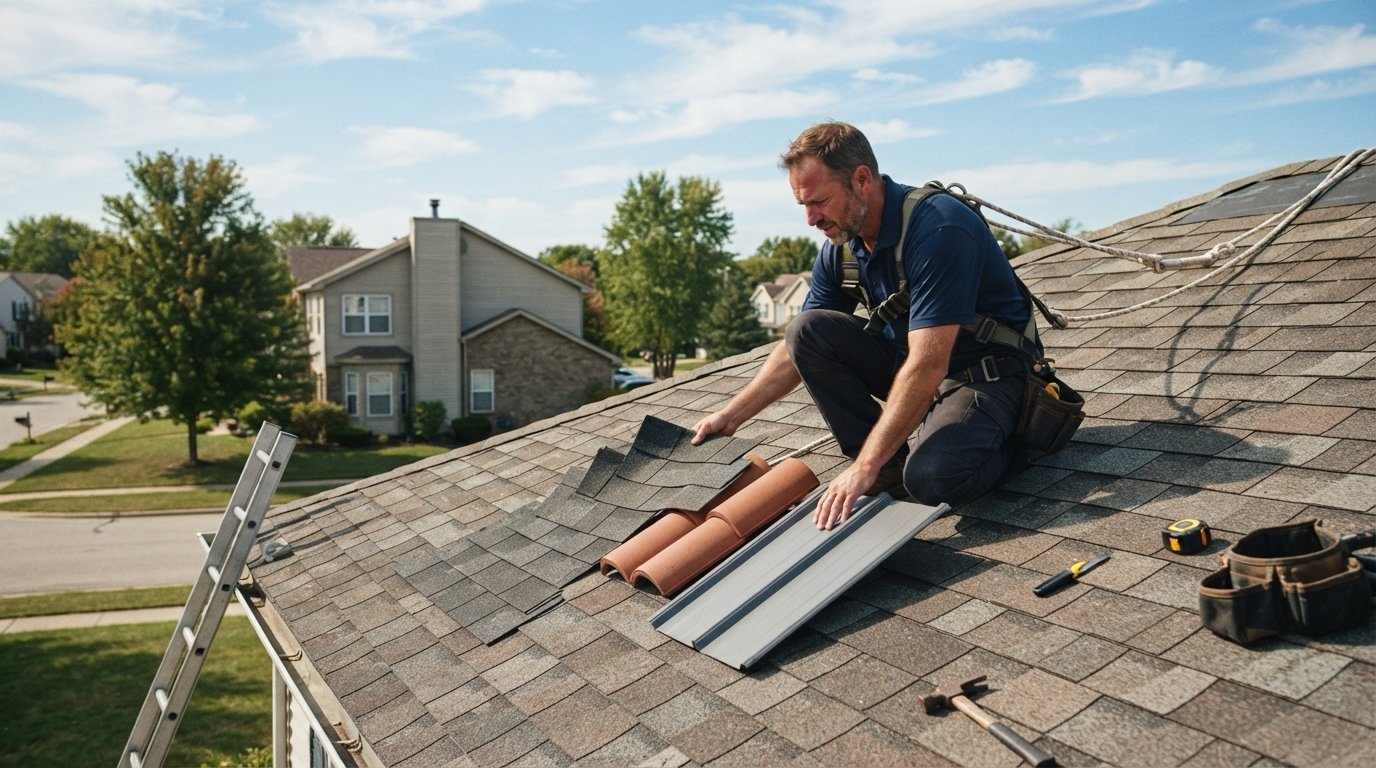
Choosing the Right Roofing Material for Your Home
Choosing the right roofing material for your home protects your budget and curb appeal. Call (833)-700-4293 to compare vetted local contractors today.
By Peter Hubert
Learn more about Roof Installation or Replacement for guides, costs, and what to expect.
Compare Roof Installation or Replacement Pros Near You

Enter your ZIP code to compare top-rated local professionals and request free quotes.
Your roof does more than cap your house. It sheds rain, blocks UV rays, insulates living space, and anchors your home's curb appeal. When it starts to fail, the ripple effects reach every corner of your budget: water stains on ceilings, rising energy bills, and the nagging worry that the next storm will cause serious damage. That is why choosing the right roofing material for your home is one of the most consequential decisions a homeowner can make. Pick well, and you get decades of quiet protection. Pick poorly, and you may face premature repairs, insurance friction, or a replacement bill years ahead of schedule.
This guide walks through the practical factors that separate a smart roofing choice from an expensive mistake. You will learn how to weigh climate, structure, budget, and lifespan, compare the most common materials side by side, and understand why professional installation matters as much as the product itself. By the end, you should feel confident narrowing your options and asking contractors the right questions.
Why Roofing Material Choice Matters More Than Most Homeowners Realize
A roof is a system, not a single product. Shingles, underlayment, flashing, ventilation, and decking all work together. The material you see from the street is only the top layer, but it drives the performance of the whole assembly. Asphalt shingles shed water differently than clay tiles, and metal panels handle thermal expansion differently than wood shakes. Each material demands specific installation techniques, fasteners, and maintenance routines.
The stakes go beyond weather protection. Roofing affects resale value, insurance premiums, and even how quickly your home sells. Buyers in hail-prone regions often ask about impact ratings. Buyers in historic neighborhoods may care about authentic appearance. Insurers may offer discounts for Class 4 impact-resistant products. Choosing the right roofing material for your home therefore means balancing aesthetics, durability, and long-term cost rather than chasing the lowest bid.
There is also the question of timing. A roof replacement is a major capital project, and rushing it can lock you into a material that does not fit your climate or your home's structure. Many homeowners find it helpful to follow a structured planning process, similar to the approach outlined in our guide on finding a reputable home renovation company, before they ever request quotes.
Key Factors That Should Drive Your Decision
Before comparing specific materials, establish your personal criteria. The right answer for a beach house in Florida will differ from the right answer for a colonial in New England or a ranch home in Texas. Four factors usually dominate the conversation: climate, roof structure, budget, and longevity expectations.
Climate is the most obvious. Homes in the hail belt need impact resistance. Coastal homes need corrosion resistance and wind uplift ratings. Regions with heavy snow need materials that handle freeze-thaw cycles and snow load. Hot, sunny climates reward reflective surfaces that lower cooling costs. If you ignore these realities, even a premium material can underperform.
- Climate exposure: hail, wind, snow, salt air, and UV intensity vary dramatically by region.
- Roof structure: slope, framing, and load capacity determine which materials are even feasible.
- Budget: upfront cost matters, but so does cost per year of service life.
- Longevity expectations: how long do you plan to stay in the home?
- HOA and code rules: some neighborhoods restrict color, profile, or material type.
Once you have ranked these factors, the material shortlist often becomes obvious. A homeowner planning to sell in five years may prioritize curb appeal and upfront cost. A homeowner building a forever home may invest in a 50-year metal or slate roof. Neither choice is wrong, but they serve different goals.
Comparing the Most Common Roofing Materials
Most residential roofs fall into one of five categories: asphalt shingles, metal, tile, wood, or synthetic composite. Each has a distinct profile of cost, lifespan, maintenance, and appearance. Understanding these trade-offs is the heart of choosing the right roofing material for your home.
Asphalt Shingles
Asphalt shingles dominate North American roofs for good reason: they are affordable, widely available, and easy to install. Standard three-tab shingles last roughly 15 to 20 years, while architectural (dimensional) shingles often reach 25 to 30 years. Impact-resistant versions can earn insurance discounts in hail-prone states. The main drawbacks are moderate lifespan and susceptibility to wind uplift if not properly nailed.
Architectural shingles offer a good middle ground for homeowners who want decent durability without a premium price tag. They come in a wide range of colors and profiles that mimic wood or slate. If your budget is tight and your climate is moderate, asphalt is often the pragmatic choice.
Metal Roofing
Metal roofs, including standing seam and corrugated panels, have surged in popularity. They last 40 to 70 years, reflect solar heat, and shed snow and rain efficiently. They are lightweight, which can be an advantage on older homes with limited structural capacity. The upfront cost is higher than asphalt, typically two to three times as much, but the cost per year of service life can be lower.
Metal also performs well in wildfire-prone areas because it does not ignite. However, it can be noisy in heavy rain unless installed over solid decking with proper underlayment. Dents from large hail are possible on thinner panels, so check gauge and warranty terms carefully.
Tile Roofing (Clay and Concrete)
Tile roofs are common in Mediterranean, Spanish, and Southwestern styles. Clay and concrete tiles last 50 years or more and resist fire, rot, and insects. They are heavy, often requiring structural reinforcement, and they are more expensive to install. In freeze-thaw climates, some tiles can crack, so product selection matters.
Tile is an excellent choice for homeowners who plan to stay long term and want a distinctive look. It also performs well in hot climates because the air space under the tiles provides insulation. The main barriers are weight and cost, not performance.
Wood Shakes and Shingles
Wood roofs offer a natural, textured appearance that complements craftsman and historic homes. Cedar and redwood shakes can last 30 to 40 years with proper maintenance. They require periodic treatment to resist mold, insects, and fire. In wildfire zones, wood roofs are often restricted or discouraged by insurers.
Wood is a niche choice today. It appeals to homeowners who value authenticity and are willing to accept higher maintenance in exchange for curb appeal.
Synthetic and Composite Roofing
Synthetic products mimic slate, wood, or tile while weighing less and costing less than the real thing. They often come with 50-year warranties and Class A fire ratings. Quality varies, so research manufacturers and read the fine print. Composite roofs are a strong option for homeowners who want a premium look without the structural demands of stone or clay.
How to Match Material to Your Climate and Home Style
Material performance is climate-specific. A product that excels in Arizona may fail in Minnesota. Start by identifying your region's dominant stressors: hail, wind, snow, salt, or extreme heat. Then match the material to those stressors.
In hail-prone areas, Class 4 impact-resistant shingles or standing seam metal are smart picks. In coastal zones, choose corrosion-resistant metal or concrete tile rather than products with exposed steel fasteners. In heavy snow regions, metal and tile shed snow better than asphalt, but you must consider snow load and ice damming. In hot climates, reflective metal or tile can lower attic temperatures and cooling bills.
Style matters too. A modern farmhouse may look best with standing seam metal. A Spanish colonial pairs naturally with clay tile. A traditional colonial suits architectural shingles. Ignoring style can hurt resale value even if the material is technically superior.
Understanding the True Cost of a Roof
Upfront price is only part of the equation. The true cost includes installation, maintenance, repairs, insurance implications, and replacement timing. A cheap roof that fails in 12 years may cost more over time than a pricier roof that lasts 40 years.
Consider a simple framework: divide total installed cost by expected lifespan in years. That gives you an annual cost of ownership. Asphalt might run $150 to $250 per year, while metal might run $200 to $350 per year, but with far less maintenance and better energy performance. Tile and slate can be higher upfront but extremely low annualized.
Also factor in ventilation and underlayment upgrades. A premium shingle installed over poor ventilation will fail early. Contractors who cut corners on underlayment or flashing create leaks that void warranties. When you compare bids, compare scope, not just the top-line number.
Installation Quality: The Hidden Variable
Even the best material performs poorly if installed incorrectly. Nail placement, flashing details, ice-and-water shield, and ridge ventilation all determine whether a roof reaches its rated life. This is why hiring a qualified contractor matters as much as choosing the right product.
Ask contractors about manufacturer certifications, warranty terms, and local experience with your chosen material. A roofer who mainly installs asphalt may not be the best choice for standing seam metal or clay tile. Verify licensing, insurance, and references for similar projects.
If you want to streamline the process of finding vetted professionals, resources like PlanRemodel offer directories of pre-vetted contractors and educational content for homeowners. A platform that connects you with multiple quotes helps you compare scope and pricing without chasing individual companies.
Permits, Codes, and Insurance Considerations
Roof replacements usually require permits, and some materials trigger additional code requirements. Tile and slate may need structural engineering to confirm load capacity. Metal roofs may need specific snow guards in some jurisdictions. Wood roofs are restricted in many wildfire zones.
Insurance companies also care about roofing material. Impact-resistant shingles and metal roofs can earn premium discounts. Older wood roofs may be surcharged or excluded. Before you commit, call your insurer and ask how your chosen material affects coverage and rates.
Homeowners associations add another layer. Many HOAs regulate color, profile, and sometimes material type. Review covenants before you shop. Getting approval after installation is far more painful than getting it before.
A Practical Step-by-Step Selection Process
To make the decision manageable, follow a structured process. This reduces the risk of impulse buying or contractor pressure.
- Assess your roof and goals: determine remaining life, damage extent, and how long you plan to stay.
- Define your budget range: include installation, permits, and potential structural work.
- Shortlist two or three materials: based on climate, style, and budget.
- Request multiple quotes: compare scope, warranty, and timeline, not just price.
- Verify contractor credentials: licensing, insurance, and manufacturer certifications.
- Review warranty terms: understand what is covered and what voids coverage.
- Schedule installation: confirm weather window, ventilation plan, and cleanup.
Following these steps keeps the project grounded in facts rather than sales pitches. It also gives you a paper trail if disputes arise later.
Common Mistakes to Avoid
Many homeowners regret their roof because of avoidable errors. One common mistake is choosing material based solely on the lowest bid. Another is ignoring ventilation, which shortens roof life and raises energy costs. A third is skipping permits or using an unlicensed installer, which can void warranties and create insurance problems.
Another frequent error is mismatching material to climate. Installing a product rated for moderate rain in a hurricane zone invites failure. Similarly, ignoring HOA rules can force costly removal and replacement.
Finally, do not underestimate maintenance. Even low-maintenance roofs need occasional inspection. Debris removal, flashing checks, and prompt repair of small issues prevent big problems.
When to Call a Professional
Roofing is not a typical DIY project. Falls are a leading cause of home injury, and improper installation can void warranties. If you see missing shingles, granules in gutters, ceiling stains, or daylight through the attic, call a professional for an inspection. Storm damage should be documented and reported promptly.
Professionals bring ladders, safety gear, and experience with local codes. They can also identify hidden damage to decking or flashing that homeowners often miss. For major decisions like choosing the right roofing material for your home, their input can save you from expensive guesswork.
If you are ready to compare options and get quotes from vetted local contractors, start by gathering at least three bids and asking detailed questions about materials, warranties, and timelines. A little upfront diligence protects your home and your wallet for decades.
Learn more about Roof Installation or Replacement for guides, costs, and what to expect.
Compare Roof Installation or Replacement Pros Near You
Enter your ZIP code to compare top-rated local professionals and request free quotes.