
Bathroom Remodel Cost Versus Return When Selling a Home
Bathroom remodel cost versus return when selling a home decides your equity. Call (833)-700-4293 to get matched with local pros and plan a smart upgrade.

Learn more about Bathroom Remodel for guides, costs, and what to expect.
Compare Bathroom Remodel Pros Near You

Enter your ZIP code to compare top-rated local professionals and request free quotes.
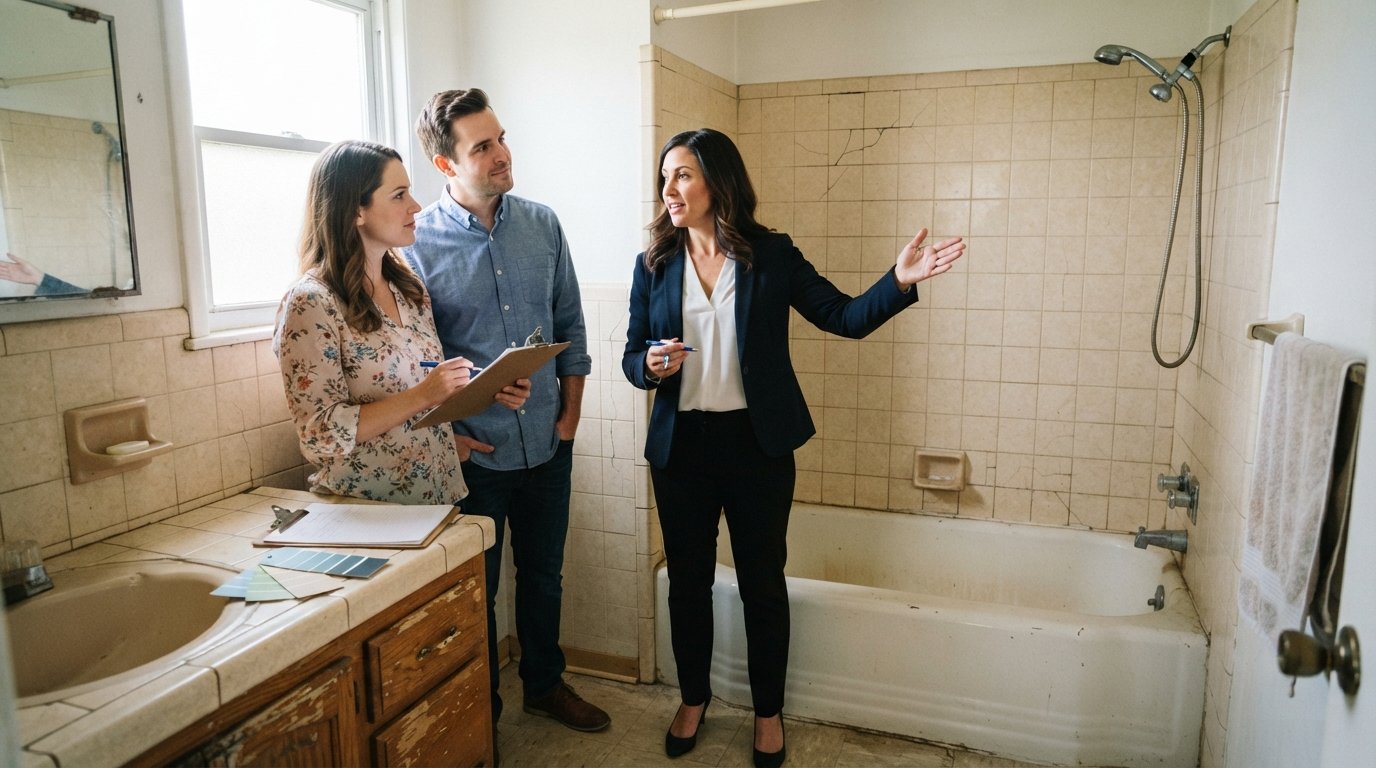
You are getting ready to sell, and the bathroom is dated. Maybe the tile is cracked, the vanity is chipped, or the tub looks like it belongs to a different decade. You want to know whether a remodel is worth it or if you should leave that decision to the next owner. The short answer is that bathroom remodels can deliver a solid return, but the gap between cost and return depends on what you upgrade, how much you spend, and when you sell. This guide breaks down the real numbers, the upgrades buyers actually pay for, and how to decide between a quick refresh and a full gut job.
Why Bathrooms Matter to Buyers and Appraisers
Bathrooms and kitchens are the two rooms that consistently influence buyer perception and appraised value. A clean, functional, updated bathroom signals that the home has been maintained. A dated or damaged bathroom signals potential problems, even if the rest of the house is in good shape. Appraisers look at bathroom count, condition, and features like double vanities or walk-in showers when comparing properties. Buyers, meanwhile, react emotionally to bathrooms because they are private spaces where condition is easy to judge.
For sellers, the key insight is that not all bathroom spending is created equal. A $30,000 high-end remodel in a mid-range neighborhood may not recoup its cost, while a $12,000 mid-range remodel can return a significant portion. The return depends on how the final product compares to other homes in the area and whether the upgrade aligns with buyer expectations. Overimproving a bathroom for the neighborhood is one of the most common ways sellers lose money.
Mid-Range Versus High-End: Cost and Resale Gaps
Industry data consistently shows that mid-range bathroom remodels recover a higher percentage of their cost than high-end remodels. A typical mid-range bathroom remodel (around $12,000 to $15,000) might return 60% to 70% of the cost at resale, according to national averages. A high-end remodel (often $30,000 or more) might return 50% to 55%. The exact numbers vary by market, but the pattern holds: the more you spend above the neighborhood norm, the lower the percentage you recover.
Here is a simplified breakdown of what these two tiers typically include and what they might mean for your bottom line:
- Mid-range remodel: Replace vanity and fixtures, install new tile floor and shower surround, update lighting, and add a fresh coat of paint. Cost: $12,000 to $18,000. Expected resale recovery: 60% to 70%.
- High-end remodel: Expand the footprint, install custom cabinetry, upgrade to stone countertops and high-end fixtures, add heated floors or a steam shower. Cost: $30,000 to $60,000. Expected resale recovery: 50% to 55%.
The takeaway is that a mid-range remodel in a neighborhood where most homes have standard bathrooms is the safer financial bet. If you are selling in a luxury market where high-end finishes are the norm, a high-end remodel may be necessary to compete, but you should still expect to leave some money on the table. The goal is not to make money on the remodel but to make the home sell faster and closer to asking price.
Which Bathroom Upgrades Buyers Actually Pay For
Not every upgrade carries equal weight. Buyers respond most to improvements that increase perceived cleanliness, storage, and functionality. A fresh, neutral bathroom with good lighting and modern fixtures will appeal to a broader pool of buyers than a highly personalized spa bathroom with bold tile choices. Here are the upgrades that tend to deliver the best return:
- New vanity and fixtures: One of the highest-impact, lowest-cost changes. A modern vanity with plenty of storage and brushed nickel or matte black fixtures updates the look instantly.
- Updated lighting: Replacing dated light fixtures and adding bright, energy-efficient bulbs makes the space feel larger and cleaner.
- Neutral tile and paint: Large-format tile in soft gray or white, paired with a neutral paint color, appeals to the widest range of buyers.
- Walk-in shower conversion: Removing a tub and installing a curbless or low-threshold shower can be a strong selling point, especially for older buyers. But keep at least one tub in the house if possible.
Upgrades with lower returns include luxury items like towel warmers, elaborate tile mosaics, and high-end sound systems. These features may impress some buyers, but they rarely add enough value to justify the cost. Similarly, expanding the bathroom footprint by stealing space from a bedroom or closet can backfire if it disrupts the home's layout.
If you are considering a spa-inspired remodel, keep in mind that relaxation features are personal. A luxurious rain shower and freestanding tub can be attractive, but the return depends on whether the rest of the home matches that level of luxury. For sellers aiming to maximize return, a clean, updated, neutral bathroom is usually the smarter choice.
Cosmetic Refresh Versus Full Gut Remodel: Decision Rules
One of the first decisions you will face is whether to do a cosmetic refresh or a full gut remodel. A cosmetic refresh includes surface-level changes like painting, replacing fixtures, regrouting tile, and updating hardware. A full gut remodel involves removing walls, replacing plumbing and electrical, and reconfiguring the layout. The cost difference is substantial, and so is the time investment.
Use these rules to decide which path makes sense for your situation:
- Assess the bones: If the plumbing, electrical, and waterproofing are in good condition, a cosmetic refresh is often enough. If there are signs of water damage, mold, or outdated wiring, a deeper remodel may be necessary for safety and marketability.
- Compare to neighborhood norms: If neighboring homes have basic bathrooms, a full gut remodel with high-end finishes will likely be overimprovement. A cosmetic refresh that brings your bathroom up to neighborhood standards is usually the better financial move.
- Consider your timeline: A full gut remodel can take several months and may require permits. If you need to sell quickly, a cosmetic refresh can be completed in a week or two and still deliver a strong return.
- Evaluate buyer expectations: In some markets, buyers expect a primary bathroom with a double vanity and a walk-in shower. If your bathroom lacks these features, a more extensive remodel may pay off. In other markets, a clean, functional bathroom is sufficient.
Many sellers find that a hybrid approach works best: replace the vanity, fixtures, and lighting, reglaze the tub or tile, and add a fresh coat of paint. This middle path costs less than a full gut remodel but delivers more visual impact than a simple refresh. It also allows you to address minor issues without opening walls and discovering larger problems.
For a deeper look at how to plan a spa-like bathroom without overspending, see our guide on spa style bathroom remodels. It covers design choices that add comfort and perceived value while keeping the budget in check.
Timing a Bathroom Project Before Listing
Timing matters as much as the scope of the remodel. If you start a bathroom project too close to listing, you risk delays, incomplete work, and the stress of managing contractors while trying to show the home. Most real estate agents recommend completing major renovations at least two to three months before listing, giving you time to address any punch-list items and enjoy the finished space before buyers walk through.
If you are on a tight timeline, focus on projects that can be completed quickly. Painting, replacing fixtures, and updating lighting can usually be done in a few days. Vanity replacements and tile reglazing take longer but are still manageable within a few weeks. Full gut remodels should be avoided if you plan to list within a month or two. Buyers are often wary of recently completed renovations because they may suspect rushed work or hidden problems.
Another timing consideration is the season. In many markets, spring and early summer are the busiest listing seasons. If you want to sell in spring, plan your bathroom remodel for late fall or winter so it is finished well before the first open house. This schedule also allows you to test the new fixtures and address any issues before buyers see them.
How to Maximize Return on Your Bathroom Remodel
Maximizing return starts with restraint. The most profitable bathroom remodels are those that address buyer priorities without exceeding neighborhood norms. Here are practical steps to keep your project on track:
- Set a budget based on your home's value: A common rule of thumb is to spend no more than 5% to 10% of your home's value on a bathroom remodel. If your home is worth $300,000, a $15,000 to $30,000 bathroom budget is reasonable.
- Prioritize function over luxury: Buyers value storage, water pressure, ventilation, and cleanliness more than high-end materials. Invest in a quality exhaust fan, good lighting, and a comfortable layout.
- Choose neutral, durable materials: Porcelain tile, quartz countertops, and solid wood or high-quality plywood vanities hold up well and appeal to a wide audience.
- Hire licensed professionals: Poor workmanship can turn a value-adding remodel into a liability. Use a platform like USremodel to get multiple quotes from vetted contractors and compare scope and pricing.
If you are also considering energy-efficient upgrades, such as solar panels, to reduce utility bills and appeal to eco-conscious buyers, you can request free solar quotes to see if it makes sense for your home. Energy efficiency is increasingly important to buyers, and combining a bathroom refresh with solar can strengthen your listing.
Finally, do not overlook the importance of a clean, well-staged bathroom. Even a modestly updated bathroom can show well with fresh towels, good lighting, and a clutter-free counter. Small touches like a new shower curtain and a plant can make the space feel inviting without adding significant cost.
When to Skip the Remodel and Sell As-Is
There are situations where remodeling before selling does not make sense. If the local market is hot and inventory is low, buyers may be willing to overlook a dated bathroom in exchange for a lower price. In that case, you might be better off selling as-is and letting the next owner handle the updates. Similarly, if the bathroom has fundamental layout problems that cannot be fixed without major expense, a cosmetic refresh may not be enough to change buyer perception, and a price adjustment may be the more honest approach.
Another factor is your financial situation. If you would need to finance the remodel and the added debt would strain your budget, it may be wiser to sell without renovating. The return on a bathroom remodel is rarely 100%, so you should not expect the project to pay for itself entirely. Treat it as an investment in speed of sale and marketability rather than a profit center.
To make the best decision, get estimates from local contractors and talk to a real estate agent who knows your neighborhood. They can tell you what buyers expect and what level of renovation is typical. With that information, you can calculate your bathroom remodel cost versus return when selling a home and choose the path that protects your equity.